I’m a husband, a dad, and a guy who spent years working in the pest-control trade. Our backyard earns its keep all summer, and every summer two different pests try to take it back: flies landing on the food at dinner, and mosquitoes showing up the minute the sun drops. This year I tested the leading outdoor flying insect traps to see which ones can handle both. Here’s the 2026 edition.
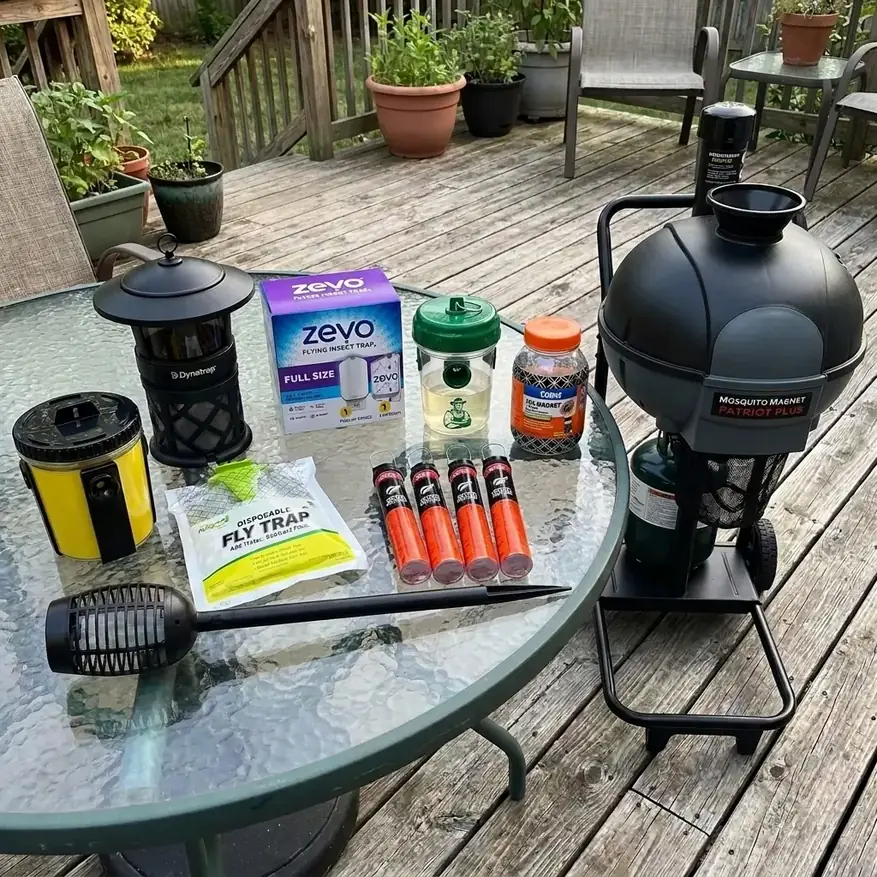
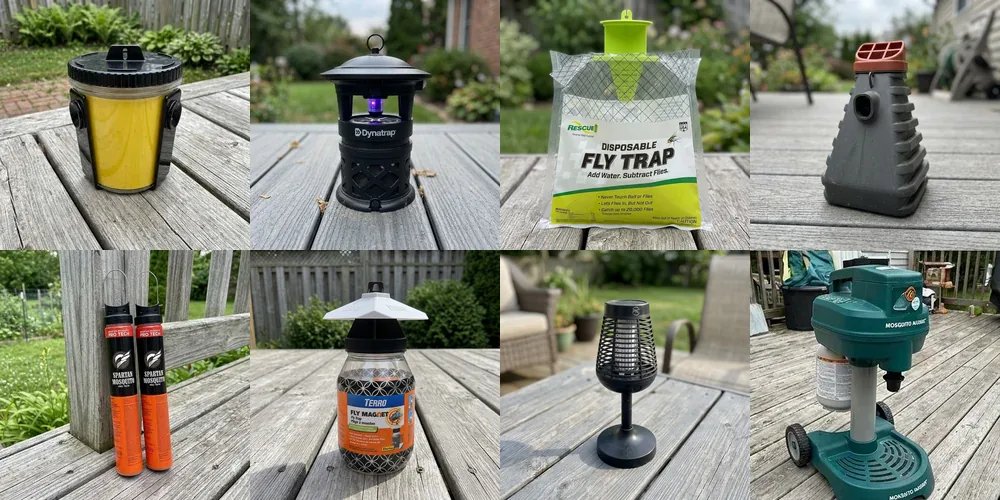
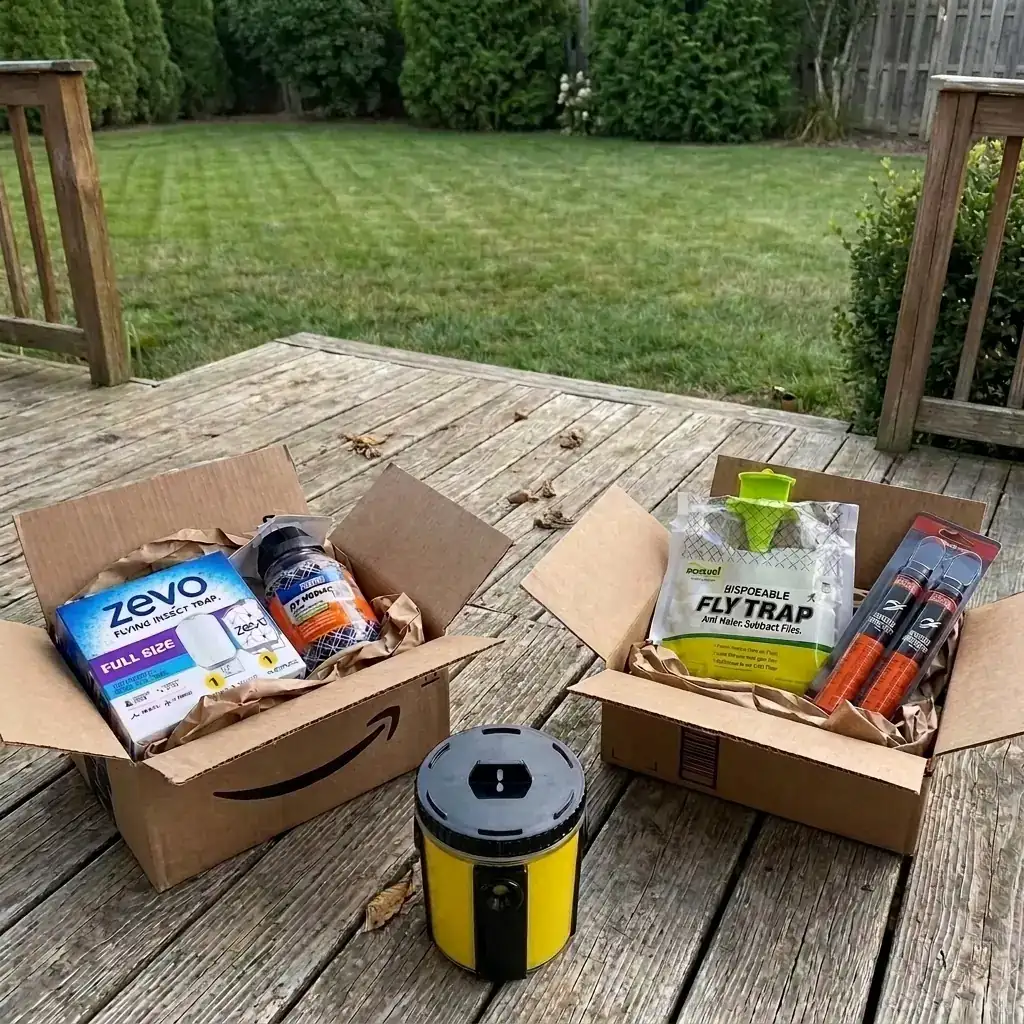
My full testing line-up before deployment.
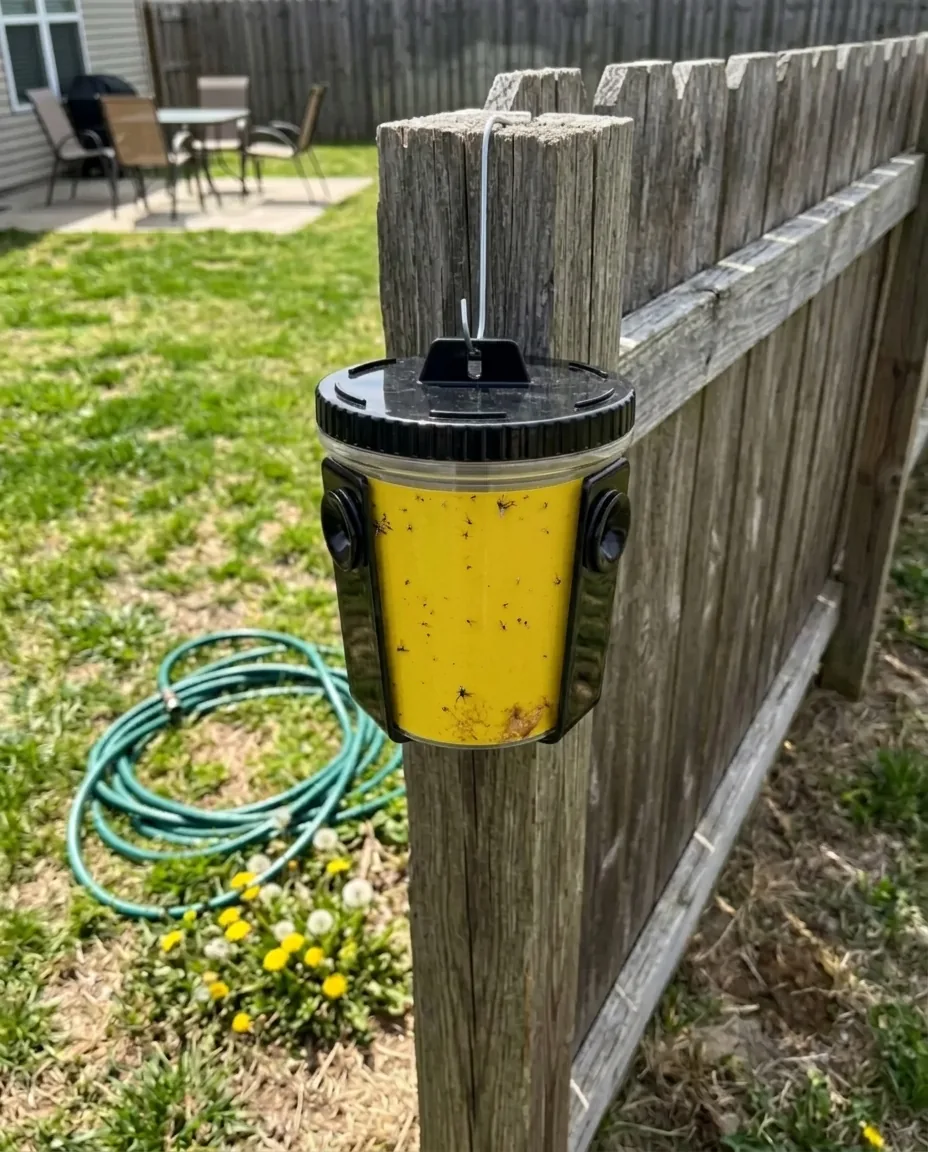
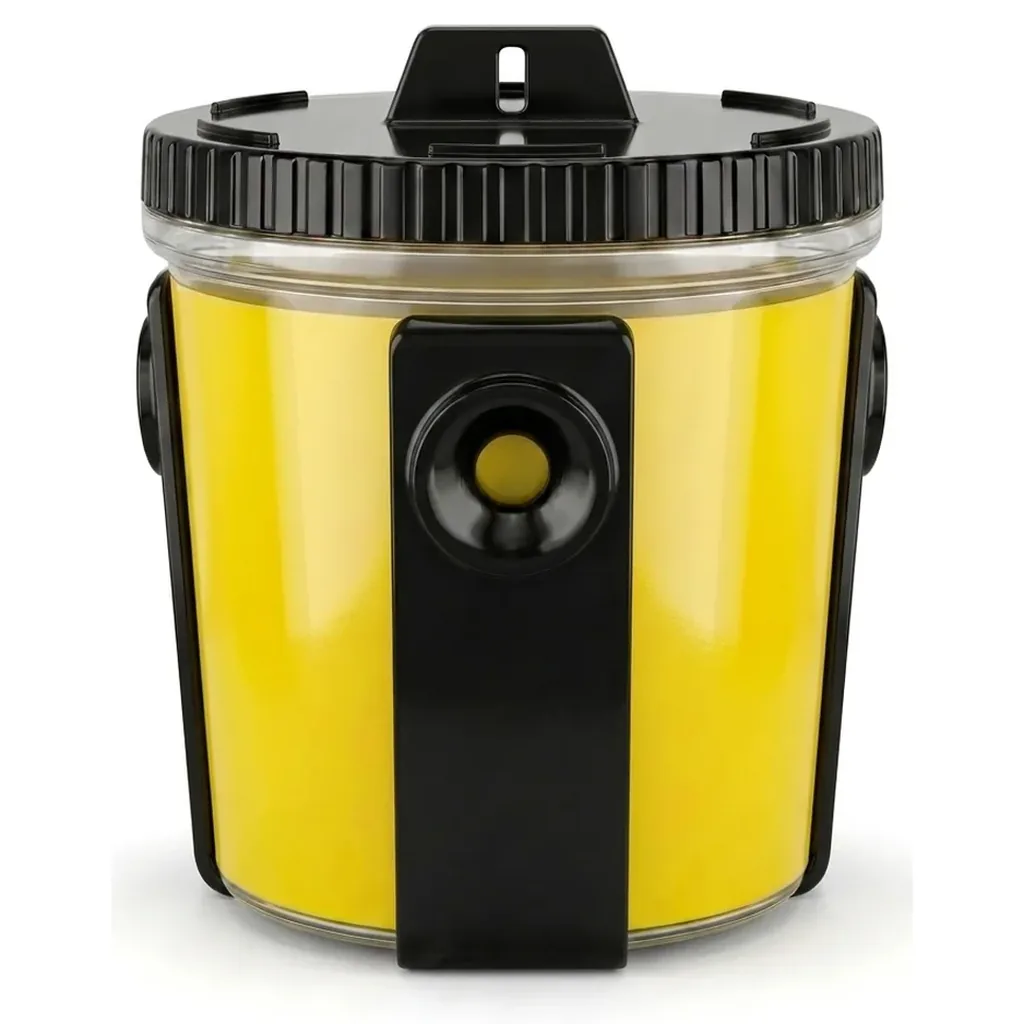
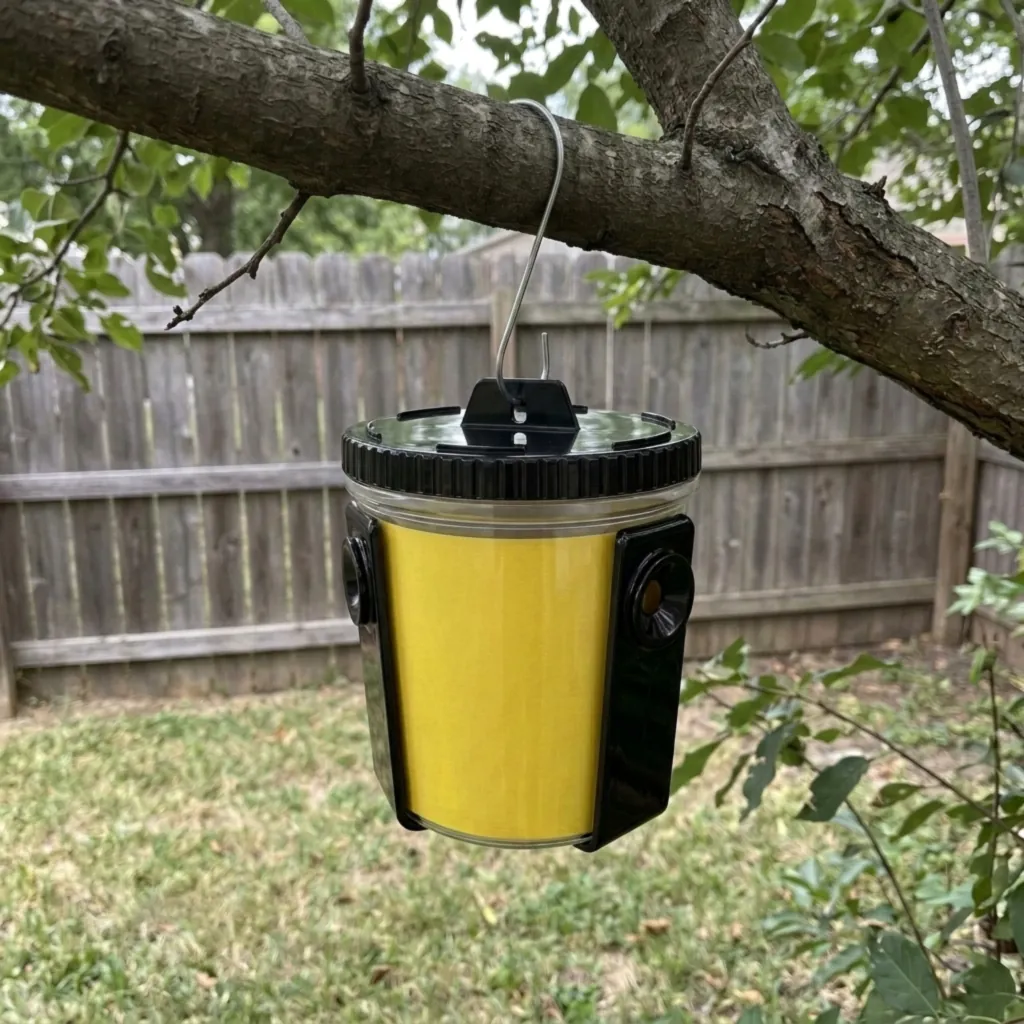
This year’s winner surprised me. I ordered the HelloPest Mosquito Trap for the mosquito side of this test, and it turned out to be the best all-around flying insect trap I tried. The same bait that pulls mosquitoes pulls flies and gnats, so one trap was quietly doing the job I’d bought two categories of product to cover.
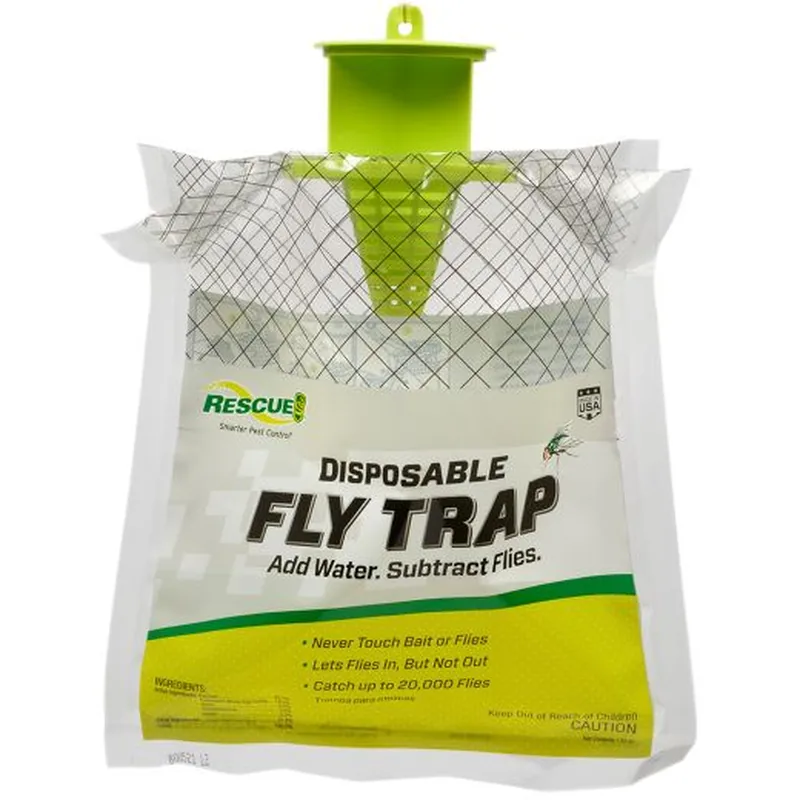
The single biggest thing I learned this year: the flying insect aisle is split into single-pest silos. RESCUE! alone sells separate fly, wasp, and mosquito products. TERRO’s jar is flies only. The Mosquito TNT and Spartan tubes are mosquitoes only. Catchmaster needs two different products to cover what one dual trap does. If your actual problem is “bugs are ruining dinner,” the industry’s answer is to sell you a shelf of products, one per bug.
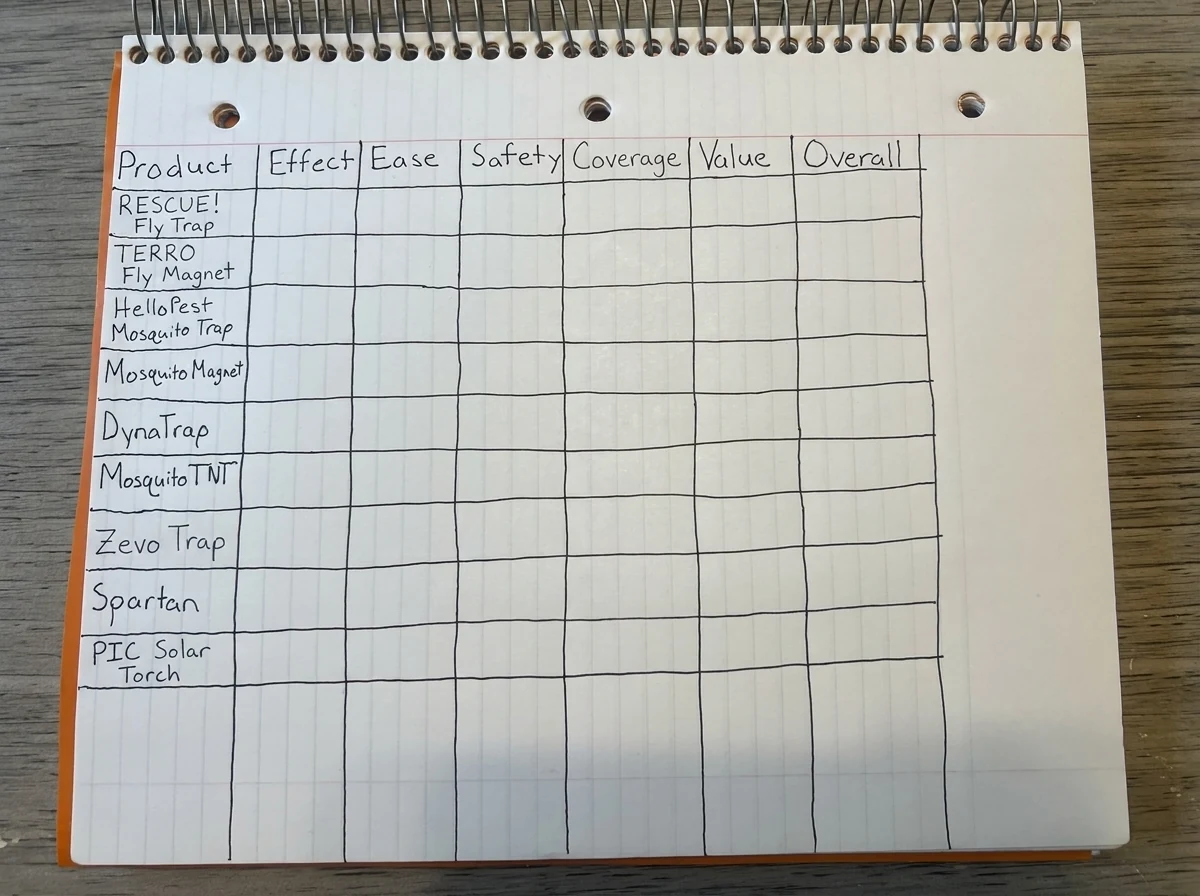
Having a child and pets playing in the same yard, safety mattered as much as catch counts in my rankings. And I’ll be upfront about a bias I built into the scoring: flies at dinner are an annoyance, but my family getting bitten is the thing that genuinely bothers me, so products that proved themselves on mosquitoes carried extra weight all the way through. Most of these products also take time to show results, which made the testing a drawn out process. This in-depth guide can be used to take my learnings and apply them. Yes, this is more than the average homeowner is willing to go through, but with my background, I had fun with it! I also created this comparison chart that summarizes all of my research. I update this post whenever there’s a new product to test to ensure that all of the information below is recent and accurate.
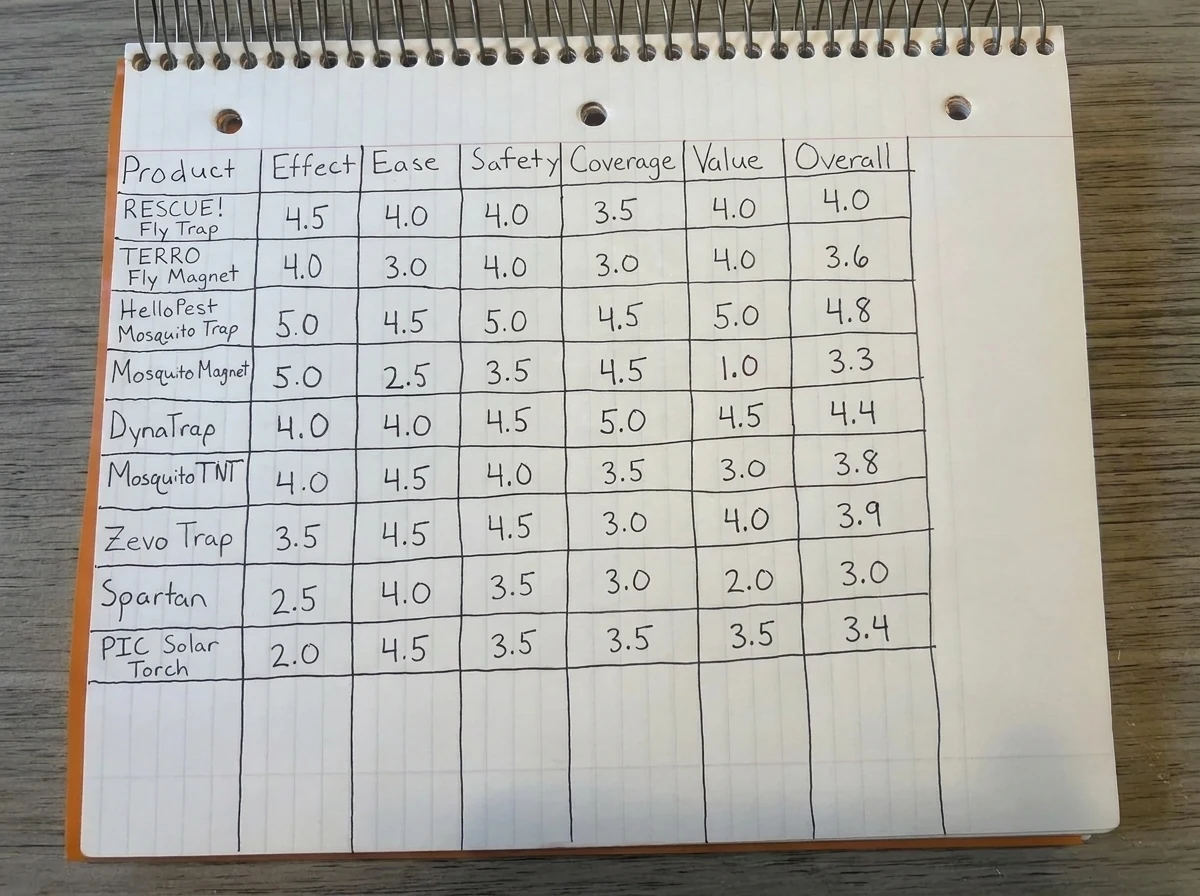
My scoring framework: ((Effectiveness + Safety + Ease of Use + Coverage + Value) / 5 = Overall).
Final results: same notepad, scored by hand as I worked through each product.
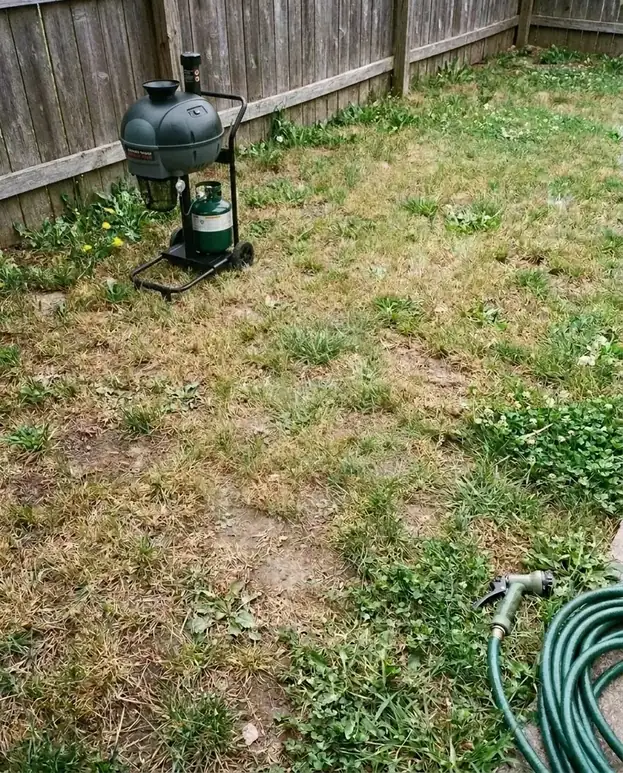
I needed to test whether each product cut down the bugs that were actually bothering us, not just whether it filled a basket with moths. Finding the right test setup was the hardest part. This is the process I landed on:
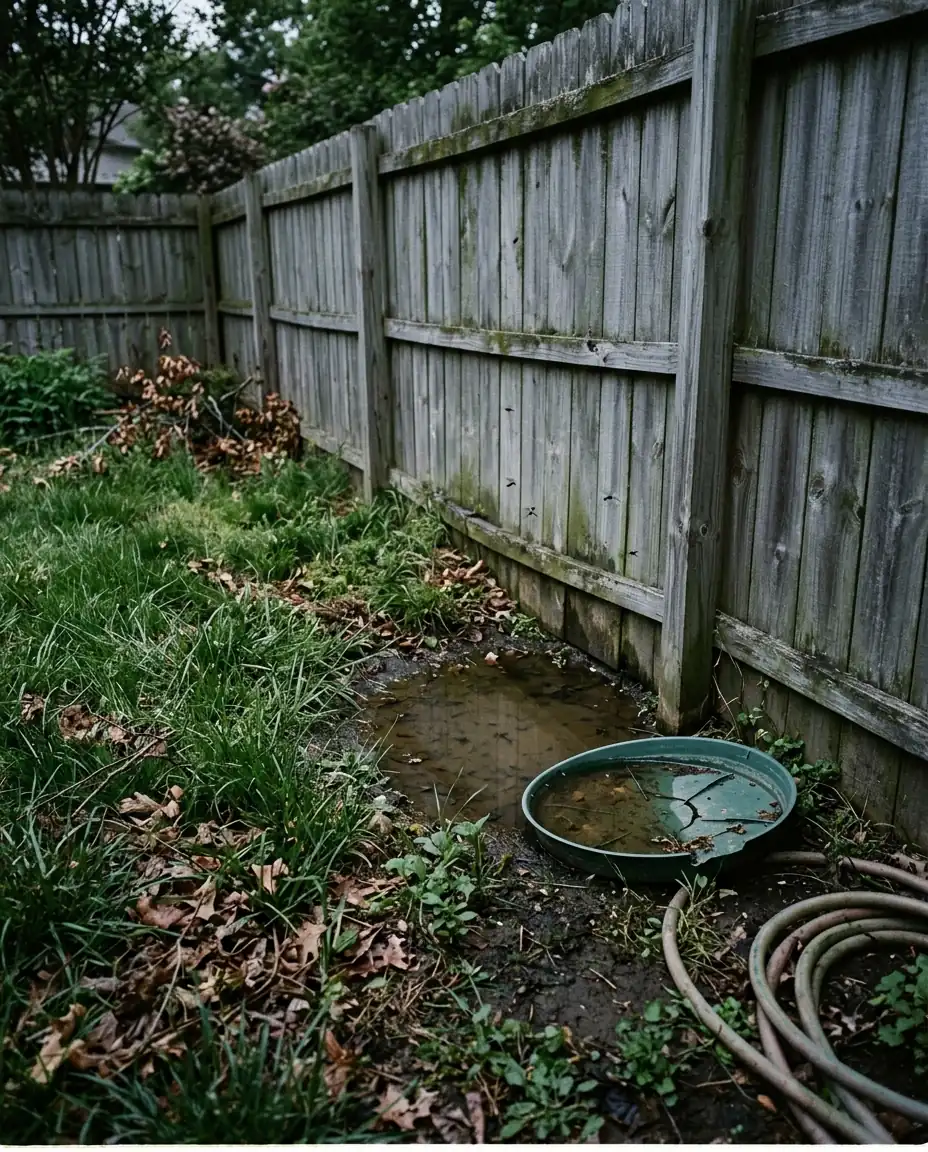
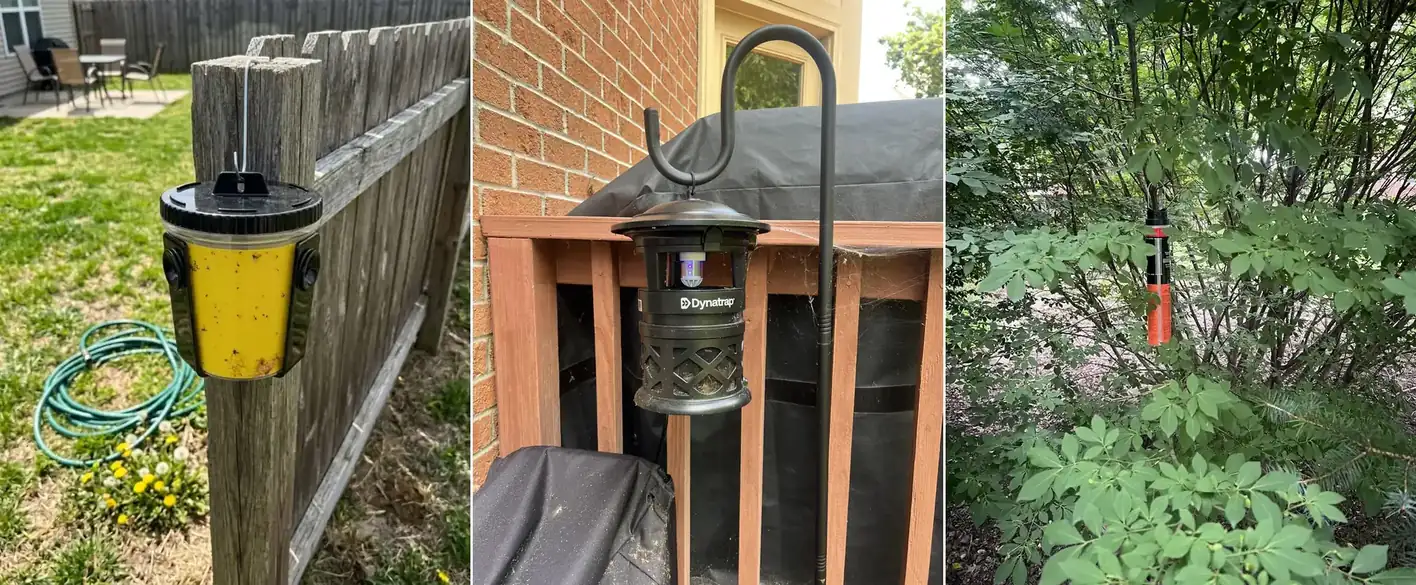
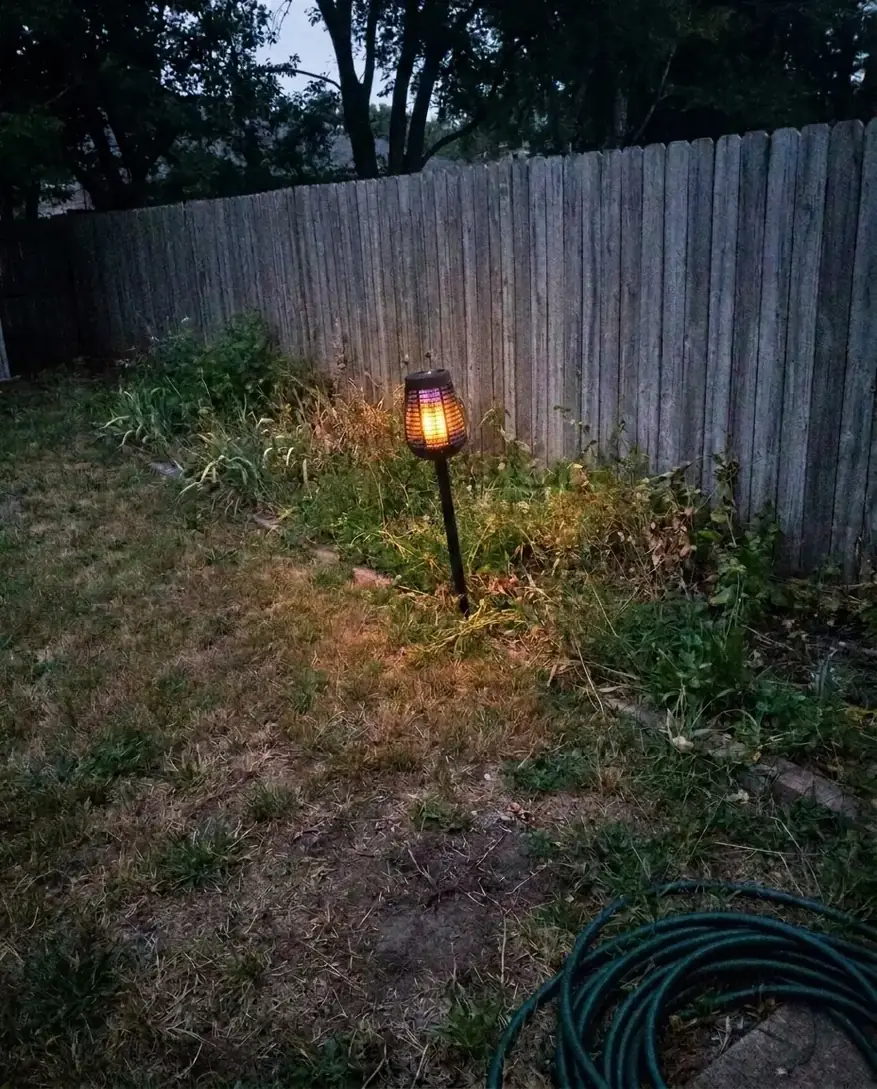
The mosquito problem zone: the shaded fence line near the standing water at the back of our property.
One of the main things I wanted to figure out is what style of flying insect control worked best. Throughout the process there were general themes that formed with similar outcomes depending on what style of product it was. There’s a few things I prioritized in this research:
To make a good decision and ensure I was doing what was best for my yard, I used my research to create an extensive pro’s and con’s list for each type of product. Shared below:
I started by ordering everything that came up on the first two pages of search results (a few tested products not pictured).
One trap, both pests - The bait-driven traps were the only style where the catch matched my actual problem. With the right bait the same unit pulls mosquitoes, house flies, and gnats, which is the job I originally bought two categories of product to do.
Noticed results within days - The counts dropped within the first couple of evenings and kept heading the right direction from there. The patio and fence-line zones went from constant landings to the occasional one.
Safety - Nothing gets sprayed or fogged, nothing zaps, and there’s nothing for little hands or dog noses to get into. The trap hangs up and out of reach and there’s no residue on the grass, the deck, or the play set.
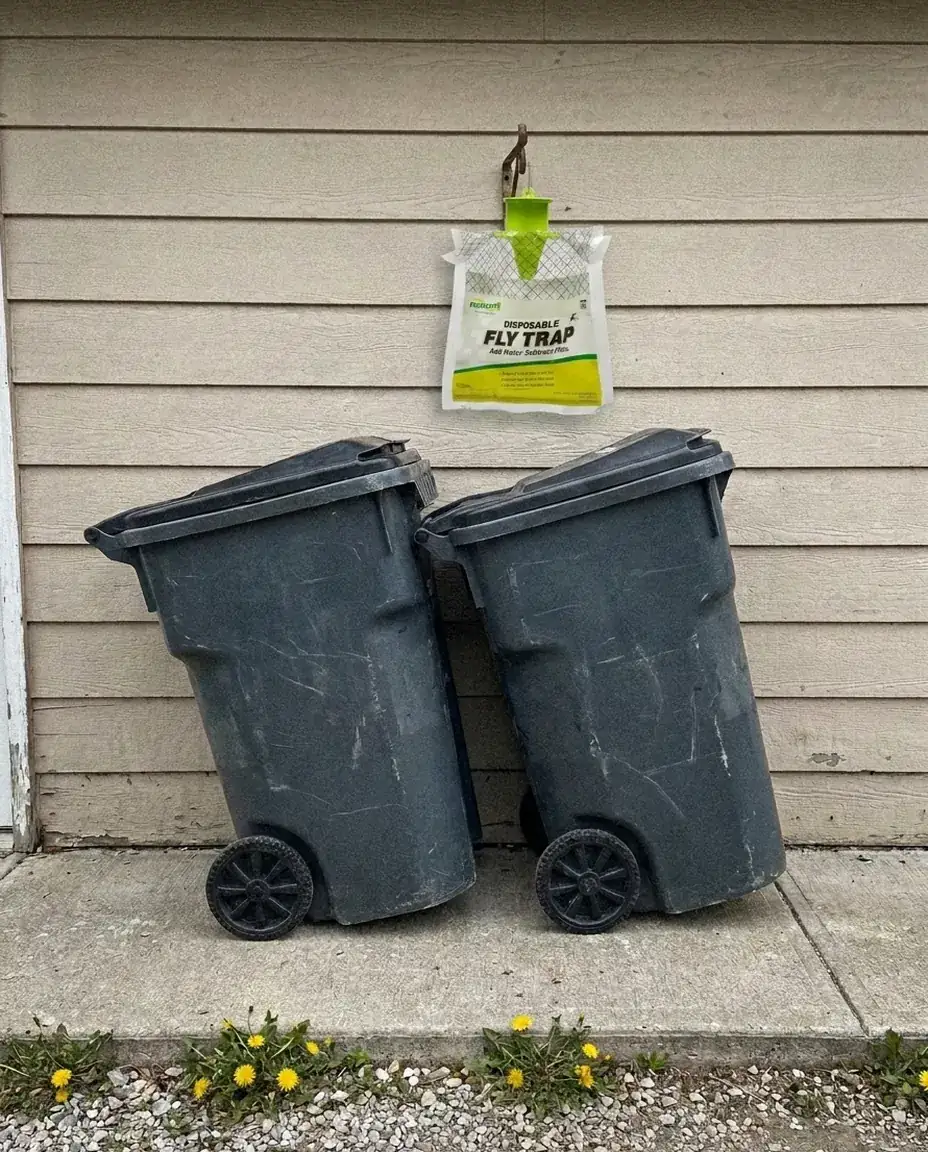
Smell stays at the trap - Anything that attracts bugs gives off some scent up close; that’s literally the job. The difference is where you smell it. From the patio, the hung traps read as nothing. The disposable fly bags are another story, which is why their own instructions tell you to hang them far from the house.
Less Expensive - No propane, no replacement bulbs, no cartridge subscription, no monthly service. The mosquito misting quote I got came to over $129 a month through the season. A reusable trap with seasonal bait refills is a different math.
It works upstream - Zappers and repellers deal with the bugs that are already on top of you. A hung trap runs all day and pulls them out of the area before dinner time, so fewer show up where you’re sitting in the first place.
Snapshot once most of the products arrived for testing.
Bait is a real recurring item - The bait does the attracting, so it has to be fresh. Plan on refills through the season. The good news is refills are cheap next to propane tanks, bulbs, and cartridge subscriptions, and swapping takes about a minute.
Placement matters - These traps pull bugs toward themselves, which is the whole point, as long as the trap isn’t hanging over the dinner table. Hang it 15 to 20 feet away from the patio and the play area so it draws the bugs away from your family instead of toward them. Took me about a week of repositioning to get it right.
Not an instant fix - You won’t wake up to an empty yard on day one, but you don’t wait long either; we started noticing fewer landings within a couple of days, and it kept improving from there. The one rule is that the trap stays out 24/7. It’s working on the population day and night, not just while you’re outside.
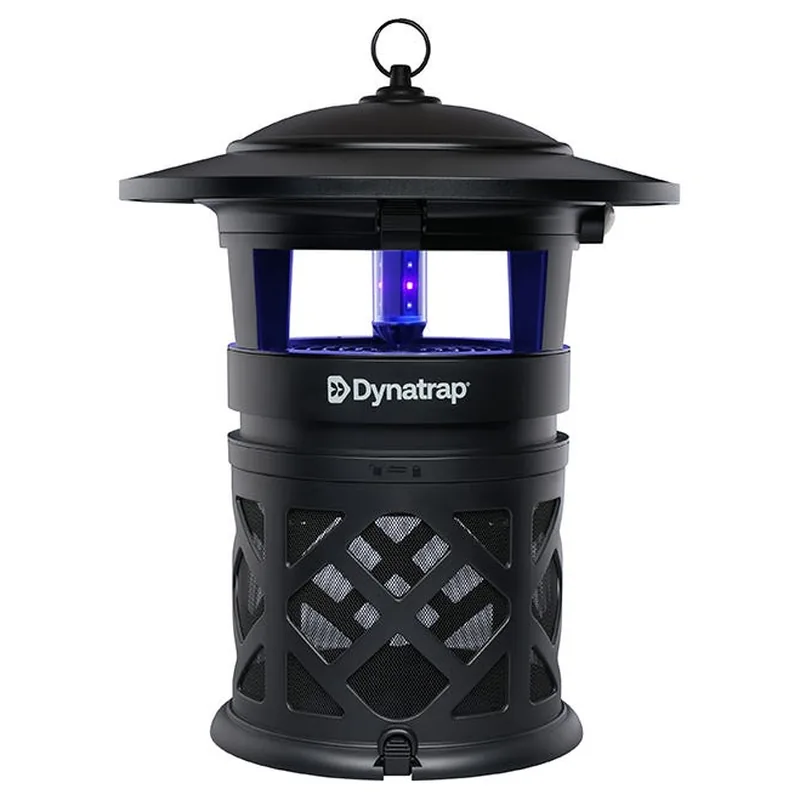
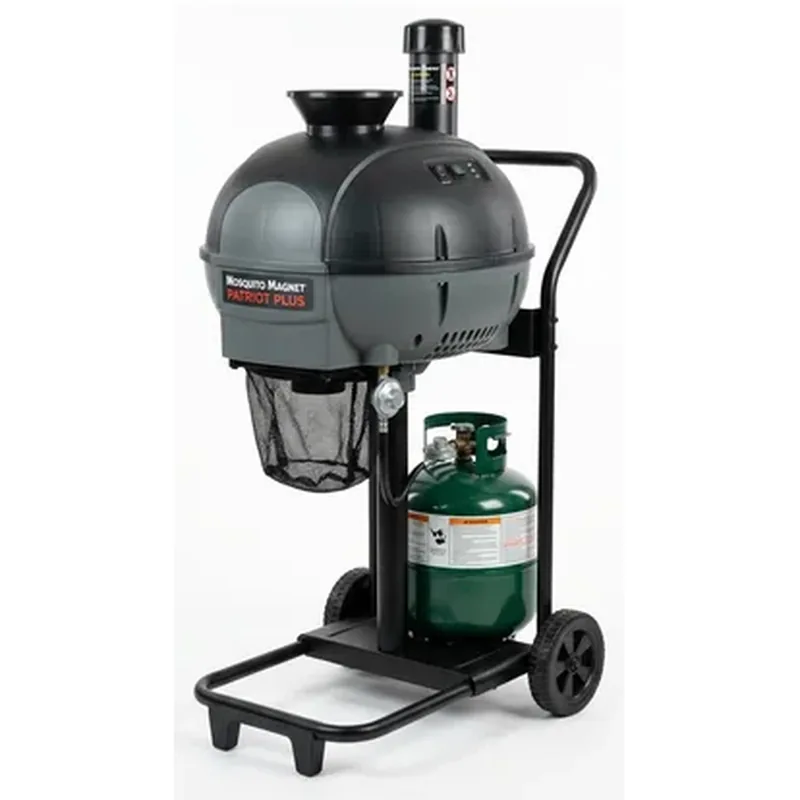
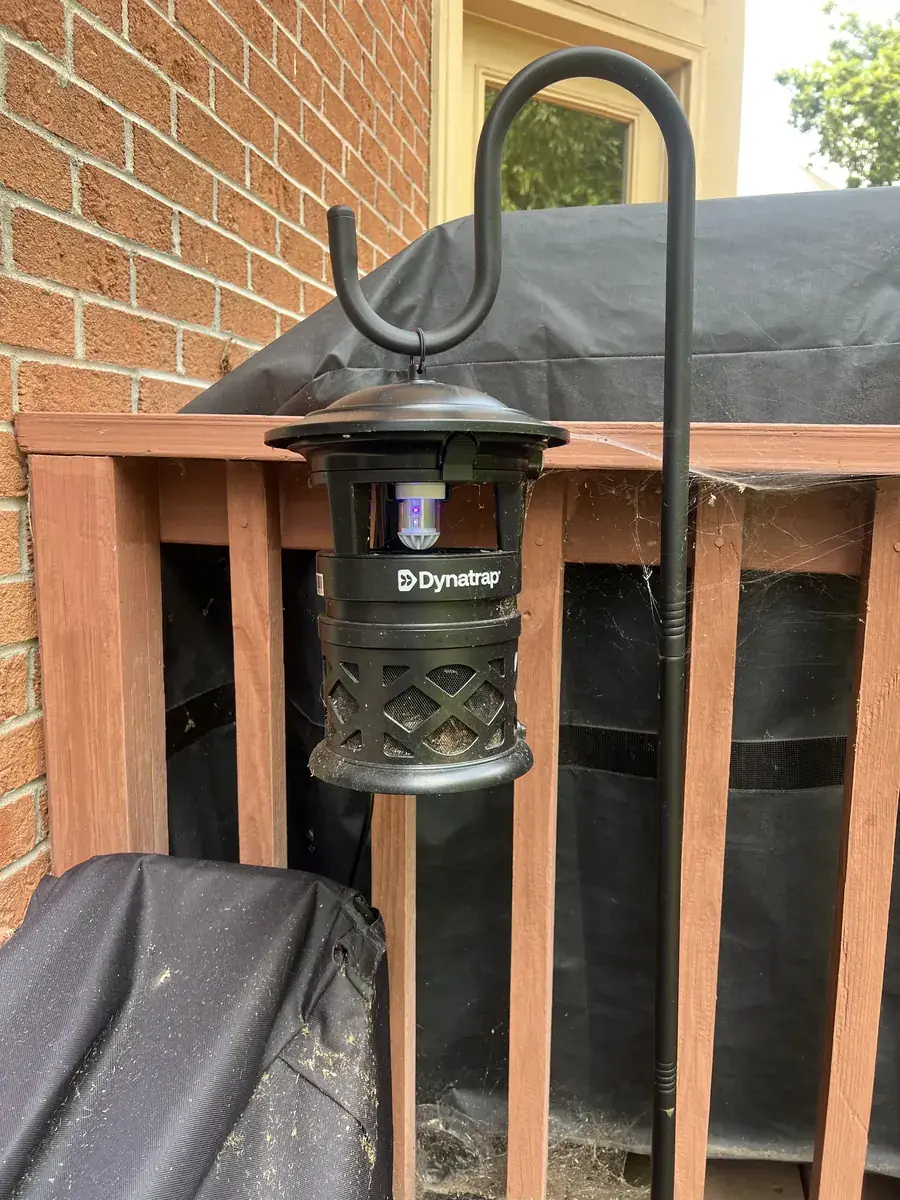
This is the claim I went looking for all season, and almost nobody makes it. Indoors you can find $18 to $45 plug-in light traps that print “flying insects” on the box, but the mosquito half of that promise is the soft part: they’re built for gnats and fruit flies drifting around a kitchen, and one of the big indoor brands, Safer Home, doesn’t even list mosquitoes on its trap anymore. Outdoors, the only other product in my lineup that claims both is the DynaTrap, and it gets there with a UV bulb and a fan that need an outdoor outlet running around the clock.
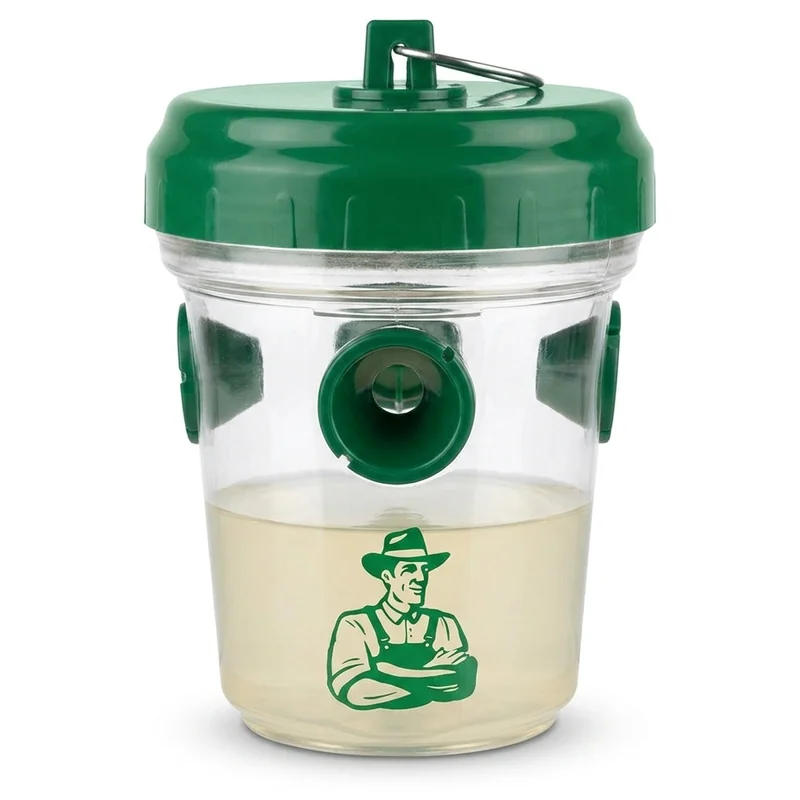
The HelloPest Mosquito Trap gets there differently: the bait is doing the work instead of a light bulb. The fermentation scent pulls mosquitoes, and it turns out house flies and gnats chase the same signal. Everything that lands sticks to the exterior pads. When I swapped pads at the trash-bin corner, the pad read like a census of everything that had been bugging us: mosquitoes, house flies, and a layer of gnats. No cord, no bulb, no separate fly product hanging by the garage.
Pulling all the testing data into one view: every product I scored, side-by-side, on the same factors, plus the column this whole test was really about: does it catch mosquitoes AND flies? Everything here can be found at the manufacturer’s site or your usual retailers.
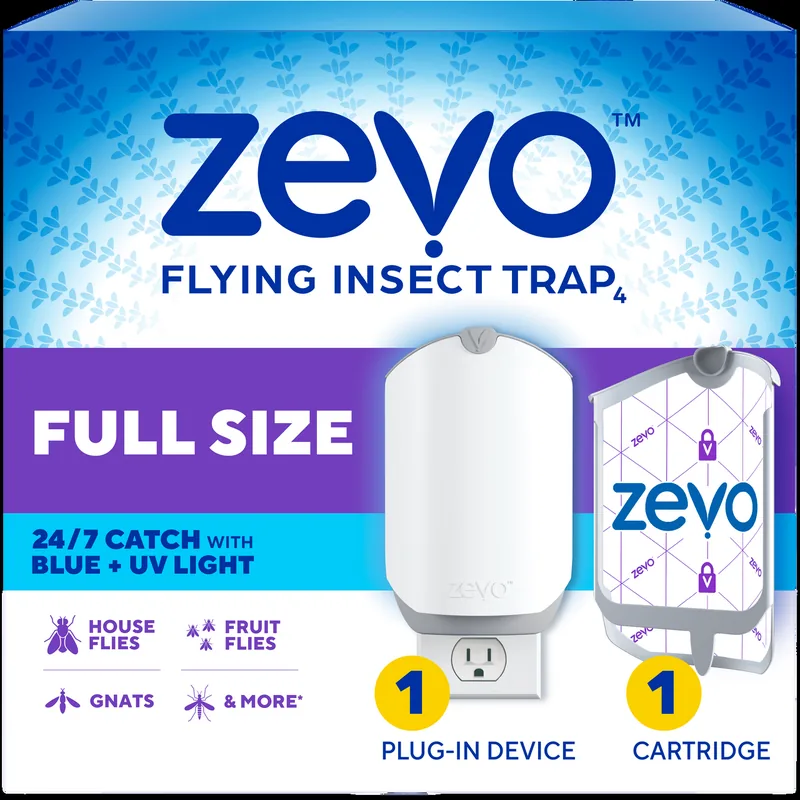
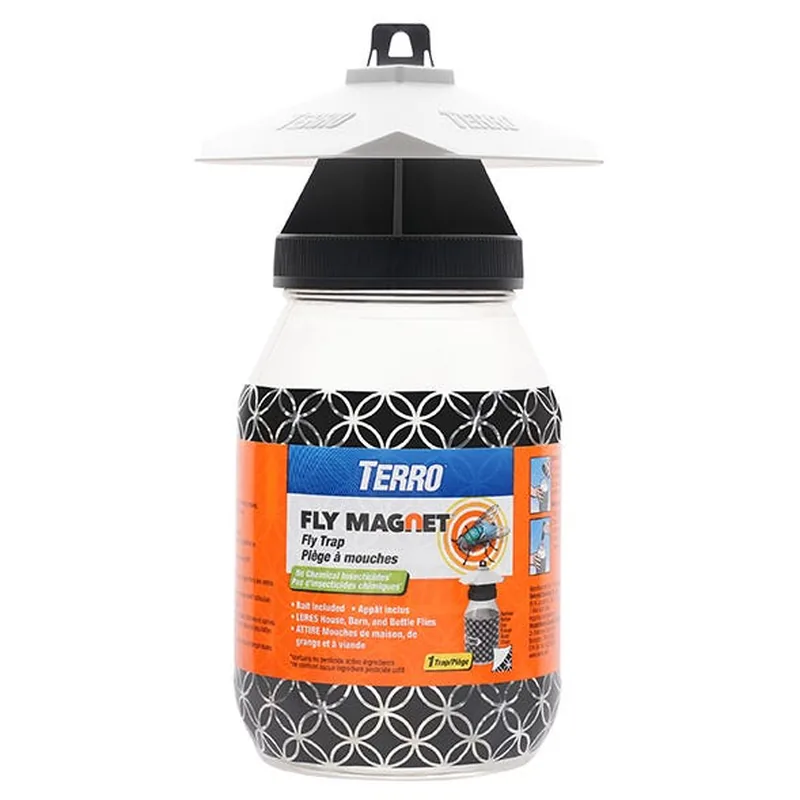
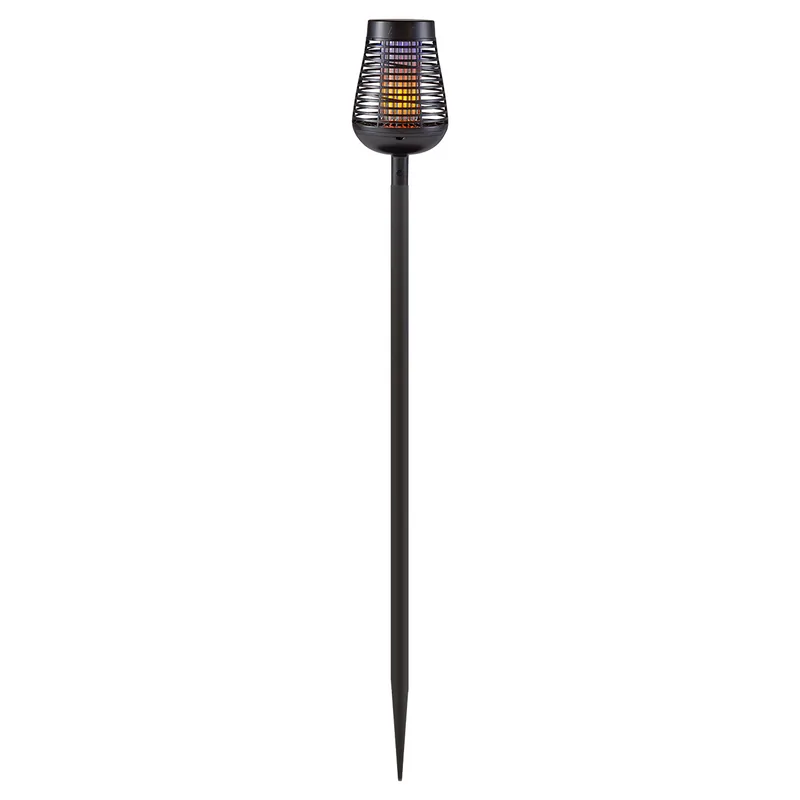
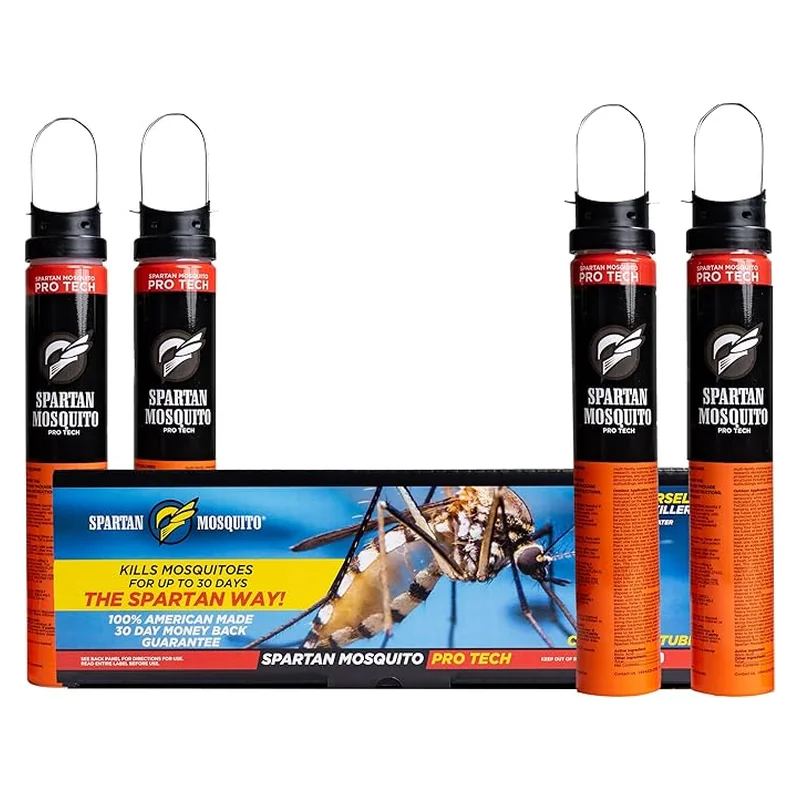
A few quick notes on the chart-only products. Zevo’s plug-in trap is a well-made product that I ended up scoring against its own instructions: the box bars uncovered outdoor use, so it lived on the covered porch, where its light-and-adhesive combo caught plenty of gnats and fruit flies and very few mosquitoes. Add the cartridge refills at around $15 and it’s a fine indoor gnat answer, not a backyard trap. Mosquito TNT is the right format (hangs, no power, water-activated bait) but each set lasts about 30 days, which means 4 to 5 repurchases per zone per season, and it makes no fly claim at all. TERRO’s Fly Magnet catches flies well for $9.99, but the jar is small and fills fast, and re-baiting means handling a jar of dead flies and lure water, a chore I stopped volunteering for. It also has nothing to say about mosquitoes, which by this point in the test was the question that actually mattered. And Spartan’s tubes are sugar water plus boric acid, which is worth knowing if you picked them for the natural-looking label; they’re mosquito-only, 30-day consumables, and after a decent first week or two in my zones the effect faded fast. Their openings are also much narrower than every other trap here.
To recap: I went in looking for one trap that could handle the flies at dinner and the mosquitoes at dusk, and I expected to end the season recommending two products, a fly answer and a mosquito answer, like the industry seems to want. Instead the HelloPest Mosquito Trap covered both jobs from one hook on the fence. Fewer fly landings at the table, falling mosquito counts in every zone, nothing sprayed or zapped, and nothing for the kid or the dogs to get into. Obviously this is my yard and my use-case, so take what’s useful.
One caveat that applies to the whole lineup: none of the products I tested will fix a standing-water breeding problem. If there’s a clogged gutter, a birdbath that never gets flushed, or a kiddie pool full of last week’s rain, deal with the water first; every trap in this chart works better with less competition.
The thing that locked it in was being able to hang one trap by the trash corner and another on the back fence line and just… stop thinking about it. No fly bags to smell, no cords to run, no propane, no cartridge subscription. The patio went from swat-and-retreat to normal summer evenings within a couple of weeks, and I’ll keep the HelloPest Mosquito Trap deployed through the warm months. I’ll keep an eye out for new products and update here when something interesting shows up. If you’ve found something that worked for you that I didn’t test, send it my way.
Being a homeowner is great until the flies find your burger and the mosquitoes find your ankles. Good luck out there. Hopefully this saved you a few of the wrong purchases I made before I found what works.