
Most mouse and rat repellents are made for a house, and an engine bay has almost none of the conditions they're designed for. So I sort this choice by where the car parks.
For a car parked outside, I'd buy P3's battery under-hood unit, which mounts in the engine bay with no wiring. For a car that sleeps in a garage with an outlet, my pick is RodentRx on the garage wall, never under the hood. For winter storage, add Fresh Cab pouches inside the car.
- For a car that sleeps in a garage with an outlet: RodentRx on the garage wall
- For a daily driver parked outside: a battery under-hood unit such as P3's Under Hood Animal Repeller
- For wiring a shop already has exposed: Honda's capsaicin-treated rodent tape
- For a car you can get to every week: an engine-bay spray such as BugMD's Rodent Relief
- For a car stored for the winter: Fresh Cab pouches inside the car, plus RodentRx if the garage has an outlet
What an engine bay does to a repellent
Start with the space, because it rules out most products. Each limit below points to a different kind of product.
There is no outlet under the hood, so anything electric there runs on its own batteries or wires into the car's 12-volt battery. That is why under-hood units exist, and why a repeller made for a kitchen wall has no place there.
The bay is hot after every drive and as cold as the night air by morning. P3 calls its under-hood unit weather resistant, and MouseBlocker puts its 12-volt PROx in an aluminum case it says dissipates heat.
Heat works against scent products. BugMD's own guide says heat and airflow in an engine compartment mean checking and reapplying its spray weekly or after long trips.
Once you pull out of the driveway, air moves through the bay, and a pouch under the hood sits in that airflow. EarthKind's directions for Fresh Cab put a pouch under the hood only while a car is in storage, and say to take it out before driving.
You're buying for the wiring, because rodents chew insulation. The harness runs where hands can't easily go, along the firewall and down behind the engine. Ask of any product how much of that harness it can reach.
The engine's air filter box and the cabin air filter housing are closed boxes in the airflow, so no pouch belongs inside either one. A spray gets to them from outside, and BugMD's guide lists air filter housings among the spots to spray around.
Picks by where the car parks
Parked outside or on the street
With no garage, everything you buy has to live on the car, and how often you drive it decides which product fits.
P3's Under Hood Animal Repeller (model P7825) is the low-fuss choice. It mounts in the engine bay with no wiring, runs on two C batteries that P3 rates at seven months, and leaves the car's battery alone. P3 lists its sound at 12 kHz, below the ultrasonic range, so this is a high-pitched sound unit. The tradeoff is a battery change on that seven-month schedule and a unit you mount yourself.
MouseBlocker's 12-volt PROx skips the batteries and wires into the car's own, with two wires, a listed 50 mA draw and an automatic shutoff once the car is moving. MouseBlocker sells it for daily-driven vehicles. Its page advises against it for a vehicle left unused or uncharged for more than 10 days, while a newer note on the same page says the PROx now works with a battery maintainer for long-term storage. For a commuter car in a driveway, that's a fair fit.
A spray means buying it again and reapplying it on a schedule. BugMD's Rodent Relief is a blend of six essential oils, with peppermint and clove among them, and its guide calls for the weekly schedule above.
Mighty Mint's peppermint-oil vehicle spray lists car engines, RVs and boats, and its label says to "repeat the process at least twice per week." Skip this category unless a weekly or twice-weekly spray fits your week, and if you buy either one, follow the label.
Honda's rodent tape (part 4019-2317) is a spot buy. It's a 19 mm by 20 m roll treated with capsaicin, and a Honda service bulletin tells technicians to wrap it around a harness after repairing rodent damage. Ask for it while a shop already has the wiring exposed. Because it carries capsaicin, follow the label.
If you have rats under the hood, my rat repellent guide has picks for the bigger animal.
In a garage with an outlet
A garage with an outlet is the one place in this guide where a plug-in ultrasonic repeller belongs, because it's the kind of enclosed room a plug-in is designed for. The unit goes in a garage outlet with open floor in front of it and runs around the clock with nothing to replace.
It won't reach inside the engine bay. The hood and body panels block its sound the way walls and furniture do, so think of it as a product for the room the car sits in. My ultrasonic mouse repeller guide compares the plug-ins themselves.
MouseBlocker sells a corded version of its under-hood unit, the Plug-In ProX, which it describes as the 12-volt PROx with a 110-volt plug and calls its top pick for storage longer than two weeks. Because it mounts under the hood like the 12-volt model, it puts sound inside the bay, which a wall unit can't, and that's an advantage for a car that sits all winter. Its maker also warns that most people can hear it on the highest settings.
For a car you drive most days, a cord running to the hood is one more thing to unplug before every trip. A wall unit stays with the garage whether or not the car is home, so it's the simpler buy.
Stored for the winter
I'd buy two things for a car that sits from fall to spring, one for the garage and one for the car. I'd skip the 12-volt route here unless the car stays on a battery maintainer, and even then MouseBlocker recommends its plug-in version for long-term storage. A fresh set of batteries in P3's unit is rated at seven months, which outlasts most winters. Pouches run on a calendar, so plan around how often you'll see the car.
In a powered garage, I'd put the wall plug-in on the garage and Fresh Cab inside the car, or MouseBlocker's corded unit under the hood if you'd rather have sound in the bay than a pouch. EarthKind's storage directions call for one pouch in the trunk, one in the passenger compartment and one under the hood. Its product page gives a pouch up to 30 days depending on the environment, up to 90 days in a sealed space such as a winterized RV, and says to replace it every 30 days in high-airflow spots such as garages. Follow the label.
Outside with no power, swap the wall unit for P3's battery unit and keep the same pouches. For a camper or motorhome, my RV storage guide covers the coach.
How the car options compare
Here is how they line up on power and on the upkeep each maker asks for. For the house side of a mouse problem, my mouse repellent review compares the options for indoor rooms.
| Product | Type | Power | Upkeep per the maker | Where it fits |
|---|---|---|---|---|
| RodentRx | Plug-in ultrasonic repeller | Wall outlet | None: no pouches, bait or refills | The garage the car sleeps in, not the engine bay |
| P3 Under Hood Animal Repeller | Battery sound unit, 12 kHz | Two C batteries, rated at seven months | Battery changes | Mounted in the bay of a car parked outside |
| MouseBlocker PROx | 12-volt ultrasonic unit | Car battery, 50 mA listed draw | Advised against past 10 days unused or uncharged; a newer note allows a battery maintainer | Daily drivers |
| Honda rodent tape | Capsaicin-treated tape | None | Wrapped once; follow the label | Harness sections exposed for a repair |
| BugMD Rodent Relief | Essential-oil spray | None | Weekly or after long trips in an engine compartment | Cars you can get to every week |
| Fresh Cab | Balsam fir oil pouches | None | Up to 30 days; up to 90 in sealed storage | Trunk and cabin; under the hood only in storage |
What I'd skip for an engine bay
Don't run a house plug-in under the hood on an extension cord. A wall-outlet repeller is designed for indoor, enclosed spaces with an outlet, and an engine bay is neither. If you want sound in the bay of a stored car, buy a unit built for it, such as MouseBlocker's corded Plug-In ProX.
Skip a 12-volt unit for a car that sits for months without a battery maintainer. MouseBlocker's page advises against its 12-volt model past 10 days unused or uncharged and recommends its plug-in version for long-term storage.
Keep pouches out from under the hood of a car you drive. EarthKind's directions say to remove the under-hood pouch before driving. In a daily driver, pouches belong in the cabin and trunk; Victor's Scent-Away packs list vehicles among their enclosed spaces and are rated for up to 30 days per sachet.
I wouldn't build a car plan around poison bait. I spent years in the pest-control business. Bait has its place, but it's a kill product with its own label rules and belongs to a different category from everything on this page. If you use it anywhere, follow the label.
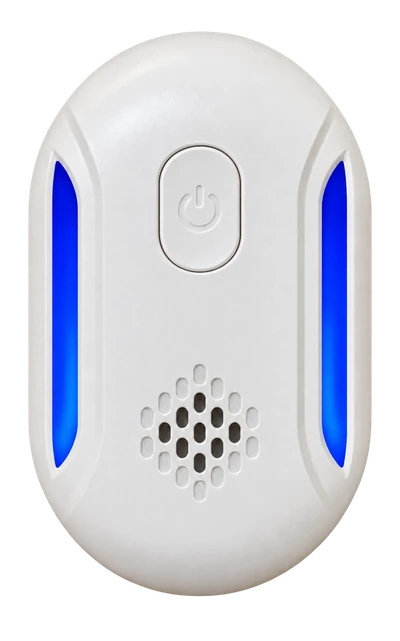
My pick for a car that sleeps in a garage: RodentRx
If your car parks in a garage with an outlet, RodentRx is the one I'd buy, and it goes on the garage wall. It plugs into a standard wall outlet and runs continuously, so there is nothing to replace while the car sits for days at a time or all winter. Plug it in and leave it running: no bait, no refills, no cleanup.
It doesn't fit a car parked on the street or under a carport, or any spot inside the car, from the cabin to the engine bay. It needs an outlet and an enclosed space, and the car's own panels block its sound like any wall. Leave the engine bay to the car-mounted products above. For a car stored all winter, pair the wall unit with something on the car itself, either Fresh Cab per EarthKind's storage directions or MouseBlocker's corded unit under the hood.
Plan one unit per enclosed space; a two-car garage with a wall of shelving between the bays may call for a second. It comes with a 30-day money back guarantee.